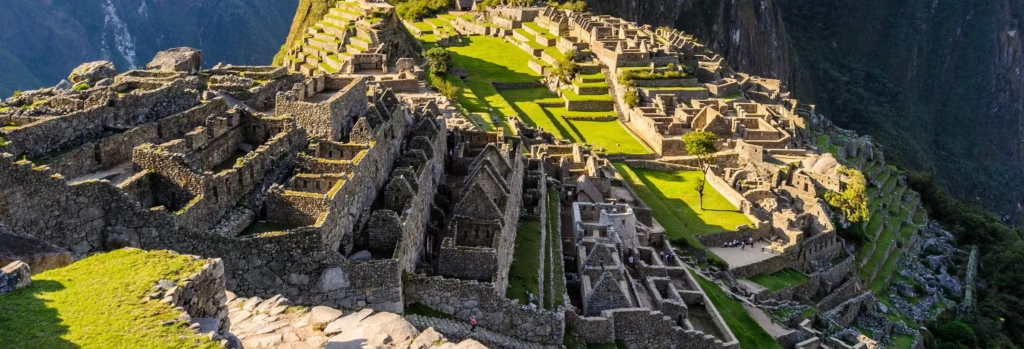
Machu Picchu is an Inca Citadel from the 15th Century. It is located in southern Peru and is approximately 2,430 meters above sea level. It is tucked high up in the Andes Mountains. Machu Picchu is often called the “Lost City of the Incas“, and it is one of the most Iconic symbols of the Inca Empire. It is believed to have been built as a private estate for Emperor Pachacuti around 1450, it was abandoned about a century later during the Spanish conquest.
The site features classical Inca architecture with polished dry-stone walls and includes notable structures like the Temple of the Sun, the Temple of the Three Windows, and the Intihuatana. There are no written records from the Inca, and modern understanding is based on archaeological evidence. Restoration began in the 20th century, and recent research suggests the site may have originally been called Huayna Picchu.
Machu Picchu became a Peruvian Historic Sanctuary in 1982, a UNESCO World Heritage Site in 1983, and was named one of the New Seven Wonders of the World in 2007.

Geography of Machu Picchu
Machu Picchu is located in Cusco, Peru. It is located 13.111° south of the equator in the Southern Hemisphere, about 80 km (50 miles) northwest of It sits at an elevation of 2,430 meters (7,970 ft), over 1,000 meters lower than Cusco, giving it a mild climate. Positioned on a mountain ridge between Machu Picchu and Huayna Picchu peaks, it overlooks the Urubamba River, which surrounds the site on three sides with steep cliffs dropping 450 meters.
The citadel’s hidden location and natural defenses made it a military secret during the Inca time. Strategic bridges, like the rope bridge at Pongo de Mainique and a tree-trunk bridge over a 6-meter gap between two cliffs, were used as secret or easily defensible access points. The city features many terraces and farms covering 12 acres, built with stone and designed for erosion control, irrigation, and drainage.
Machu Picchu was built on earthquake faults, which may have been intentionally chosen for access to fractured stone. The climate is warm, humid, and rainy, typical of a cloud forest, with an annual rainfall of around 2,010 mm (79 inches), average temperatures of near 18°C (64°F), and humidity levels between 80–90%.
History of Machu Picchu
Machu Picchu, long thought to have been built in the 1450s, may have been occupied as early as 1420, according to recent radiocarbon dating. It was likely constructed by Inca rulers Pachacutec and Túpac Yupanqui as a royal retreat, used for about 80 years before being abandoned due to Spanish conquest and diseases like smallpox. Around 750 people lived there, mostly support staff, with evidence showing they came from many regions of Peru. Their diets and health suggest light labor compared to the general Inca population’s jobs.
Animals like llamas, alpacas, guinea pigs, and dogs were brought to the site for food, rituals, and companionship. Farming was done on many terraces built to manage rain and erosion, though they couldn’t support the full population, so food was imported. Even though human sacrifice was rare, animal and ritual offerings were common.
The Spanish likely heard of the site in the 1500s, and it may have been plundered in the 1800s. Official rediscovery is credited to American explorer Hiram Bingham in 1911, who publicized the ruins internationally. Though earlier locals had visited, Bingham’s expeditions in 1911–1915 brought major excavation and research, though he controversially removed many artifacts to Yale.
Machu Picchu was declared a historic sanctuary in 1981 and a UNESCO World Heritage Site in 1983, noted for both its archaeological and natural richness. It houses diverse wildlife and plants, and the nearby town of Aguas Calientes serves tourists. With over 1.5 million annual visitors, tourism has raised concerns over environmental impact, leading to conservation efforts, visitor limits, and infrastructure debates like a proposed cable car. Natural disasters, like the 2010 floods and recent political protests, have disrupted access. Despite challenges, Machu Picchu remains Peru’s top tourist site and a globally recognized cultural treasure.